Every approved reply appears publicly beneath the review, so future customers can read it too. Google says a verified Business Profile can reply to reviews, and its own guidance is to keep responses positive, relevant, short, and professional. The examples below are starting points, not scripts to paste unchanged.
If you need the click-by-click process first, see our guide to responding to Google reviews. This page focuses on choosing words that fit the review in front of you.
Use these examples as a shape, not a script
A reply works best when it does three small jobs: it acknowledges the customer, reflects one detail they chose to share, and gives an appropriate next step. For a positive review, that next step may simply be a warm close. For a concern, it may be a private way to continue the conversation.
Before you post, replace any bracketed wording with something true for your business. Do not add private details about an order, appointment, payment, health matter, or personal interaction. A public review response is not the place to prove your side of a dispute.
- Name one real detail: use a service, product, or moment the reviewer already mentioned.
- Match the length: a one-line compliment usually needs a one- or two-line reply.
- Keep promises modest: only say you will investigate, share feedback, or make a change when you will actually do it.
- Sound like your business: warm is good, but copied wording under every review can feel less sincere than a brief personal note.
Google notes in its Business Profile review guidance that your reply is public and that the reviewer is notified when it is approved. Take a minute to read it as a future customer would. Does it sound calm, clear, and fair? If yes, it is probably ready.
- NoticeUse one detail the customer already shared.
- RespondThank them or acknowledge the concern clearly.
- GuideOffer a private contact route only when it helps.
Google review response examples for five-star feedback
For a positive review, thank the person and acknowledge what stood out to them. You do not need to turn a compliment into a sales message.
When the review is brief
“Thank you, [Name], for taking the time to leave this review. We are glad you had a good experience with us.”
This is a good fit for a short rating or a comment such as “Great service.” It is enough to be gracious without pretending the reviewer shared more than they did.
When they praise a specific person or team
“Thank you, [Name]. We are so glad [team member or team] made your visit feel welcoming. We will be sure to share your kind words with them.”
Only promise to pass the feedback on if you will do it. If the customer named someone, make sure you spell that person’s name correctly.
When they mention a product or result
“Thanks, [Name]. We are pleased that [specific product or service] was what you needed. We appreciate you choosing us and sharing the experience.”
Use the customer’s own detail, rather than adding claims they did not make. “Glad the repair was completed quickly” is safer than “We always deliver the fastest repair in town.”
When they are returning customers
“It means a lot to see you again, [Name]. Thank you for trusting us with [the service they mentioned], and for sharing this feedback.”
Keep the reply personal, but avoid revealing anything about their account, order history, or private circumstances.
Examples for a three-star or mixed review
A mixed review often gives you the clearest opportunity to show that you listen. Thank the person for what went well, acknowledge the concern without arguing, and say only what you can support.
When service was kind but the wait was long
“Thank you, [Name], for recognizing our team’s help. We are sorry the wait was longer than it should have been, and we appreciate you letting us know.”
This response validates the concern without inventing a fix. If you have confirmed a specific change, you can add one plain sentence about it. If you have not, leave it out.
When the customer liked one part but not another
“Thank you for the balanced feedback, [Name]. We are glad [positive detail] worked well for you, and we are sorry that [concern] missed the mark.”
Do not repeat every criticism or answer it point by point in public. The goal is a respectful acknowledgement, not a rebuttal.
When a private follow-up would help
“Hello, [Name]. Thank you for sharing this. We would appreciate the chance to understand the [concern] better. Please contact [team or name] at [real email address or phone number] so we can look into it with you.”
Offer a real route that someone monitors. Do not ask the reviewer to publish their phone number, receipt, or account details in the review thread.
Examples for a negative Google review
Negative feedback can make a business owner want to explain everything at once. Resist that urge. A measured public response can show care, while a defensive one can make a small problem look much bigger to everyone reading later.
When you are sorry the experience fell short
“Hello, [Name]. We are sorry to hear that your experience fell short. Thank you for bringing this to our attention. Please contact [team or name] at [real contact method] so we can learn more and help where we can.”
This keeps the door open without admitting facts you have not verified or promising an outcome you cannot deliver.
When you have already confirmed a simple correction
“Thank you for letting us know, [Name]. We are sorry for the confusion around [specific issue]. We have clarified [the confirmed change], and we would welcome the chance to discuss your experience directly at [contact method].”
Only name a correction that is real and already in place. A public reply is not the time to announce a policy change that has not been approved.
When emotions are running high
“Hello, [Name]. We take feedback seriously and would like to understand your experience. Please contact [team or name] at [real contact method] so we can continue this conversation privately.”
Short is often safer. Do not accuse the reviewer of lying, question their motives, threaten action, or reveal personal information. If a legal, safety, or privacy issue is involved, get the appropriate advice before posting a detailed reply.
- CheckConfirm the basic facts privately.
- Keep it public-safeDo not share personal or account details.
- Continue privatelyUse a real contact route for the full conversation.
When a review may not be genuine
You can report a review that you believe violates Google’s policies, but Google does not remove a review simply because it is negative or you disagree with it. Its review-reporting guidance is clear: policy-breaking reviews may be eligible for removal, while a disappointing but genuine experience is better handled with a respectful response.
When you cannot find a record of the experience, a restrained reply can be appropriate:
“Hello. We take feedback seriously and cannot locate a record that matches this experience. Please contact [team or name] at [real contact method] so we can look into it.”
Use that only when it is true. Do not label the reviewer fake in public, publish internal records, or ask other customers to challenge the review. Report the issue through the Business Profile if you believe it breaks policy, then let Google make the decision.
For a review involving threats, harassment, or personal information, keep the public response especially brief, if you reply at all. Your priority is protecting people and handling the report through the right private channel.
What to leave out of a public reply
Sometimes the strongest response is defined by what it leaves out. A public review thread is visible to anyone considering your business, and it rarely has enough context to solve a complicated issue. Keep the reply focused on acknowledgement and a useful next step.
Do not share private details
Never use a reply to confirm an appointment, describe a purchase, list payment information, discuss a medical or family situation, or correct someone with facts they did not make public. Even when you believe the reviewer is mistaken, privacy and restraint protect both people better than a detailed rebuttal.
Do not make the reply a sales offer
Google’s review guidance advises businesses to be friendly rather than promotional. A customer has already had an experience with you. Thank them or address the concern, but do not turn their review into a coupon, a pitch, or pressure to come back.
Do not promise a result you cannot control
“We will make this right” can sound caring, but it may also create an expectation before you understand the facts. Try a more honest line: “We would like to learn more and see how we can help.” It leaves room to listen, investigate, and follow through properly.
Do not use the same reply every time
A repeatable structure is useful. Identical wording is not. Choose one true detail from the review, keep your response proportional, and vary the close naturally. That small effort helps your replies feel human without forcing the team to write a long message for every customer.
Create a small reply library your team can use
A useful response library is not a stack of copied paragraphs. It is a short set of prompts that helps your team keep the tone consistent: thank the reviewer, name a real detail, acknowledge the concern when there is one, and offer a private route when that is needed.
Give one person clear ownership of checking reviews. Set a response window your team can actually meet, then leave enough time to confirm facts before replying to a complaint. Google also notes that replies may be reviewed before posting, so a response can take time to appear.
A five-minute team check can prevent most avoidable mistakes. Read the review aloud, remove any private information, confirm the contact route works, and ask whether the wording sounds like something you would say face to face. For an unusually serious complaint, pause the reply until the right person has reviewed the facts. A slower, accurate response is better than an instant answer that creates a new problem.
Once a month, group feedback into themes. Maybe customers regularly praise a staff habit, or perhaps they keep mentioning the same confusing step. Share that pattern with the team and improve the actual experience where you can. The most convincing review responses are backed by real attention after the reply is posted. That also gives your next reply a stronger foundation: you can acknowledge a concern, listen carefully, and make a meaningful change without turning the public comment into a debate. Keep the notes internal and factual, so the team learns from feedback without creating a new public narrative around one customer’s experience.
If you are still making the review path easier for customers to find, begin with a correct and tested destination. Our Google review QR code guide explains how to create and test that route, and our review-request templates help keep the invitation optional and honest.
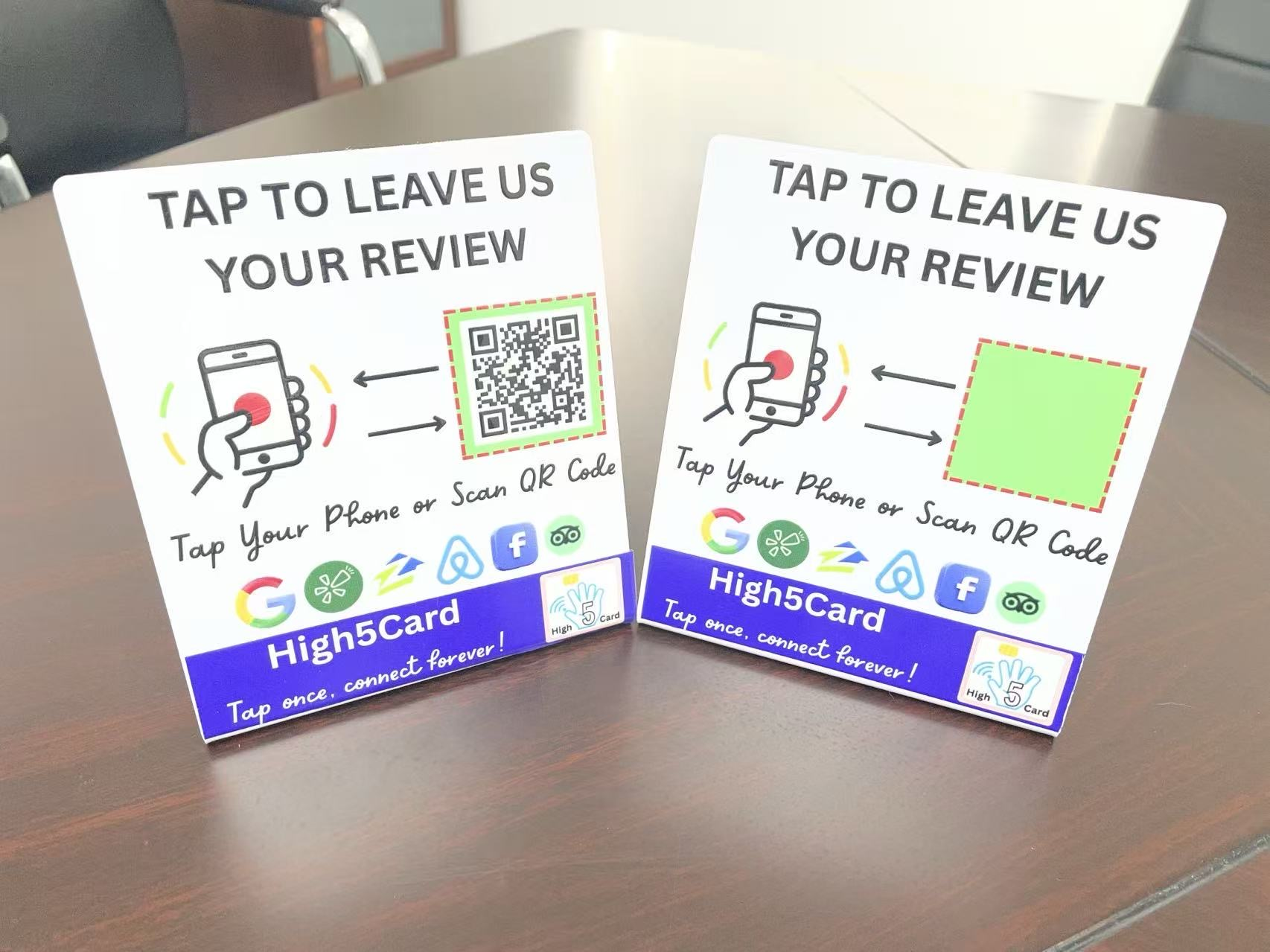
High5Card review tools can put one chosen review destination within reach by tap or QR scan. They do not create, filter, or control what someone writes. That boundary matters. Customers decide whether to leave feedback, and your business decides how to listen and respond with care.
Frequently asked questions
What is a good Google review response?
A good Google review response is short, relevant, and written for the review that was actually left. Thank the person, acknowledge one real detail when appropriate, and offer a private follow-up route if a concern needs more attention.
Can I copy and paste Google review response examples?
Use examples as a starting point, then adapt them to the customer’s actual feedback and your business. Repeating the same wording under every review can sound automated and may miss the detail the customer chose to share.
How should I respond to a negative Google review?
Acknowledge the customer’s experience, apologize when appropriate, avoid arguing or revealing private information, and offer a real private way to continue the conversation. Do not promise an outcome you cannot deliver.
Should I reply to every Google review?
Thoughtful replies can show that you listen, but each response should add something useful. A short sincere thank-you can be enough for a brief positive review, while a concern may need a calm acknowledgement and a private follow-up route.
Can I remove a negative Google review?
Google does not remove a review simply because it is negative or a business disagrees with it. You can report a review that you believe violates Google’s policies, and Google decides whether it is eligible for removal.
Are Google review responses public?
Yes. Once Google approves a reply, it appears publicly beneath the customer’s review. The reviewer is notified and may update their review afterward.